

Self-forgiveness? What’s that?
Forgive yourself for not knowing what you didn’t know before you learned it. – Maya Angelou
First, let me come clean! This reflection and invitation into self-forgiveness was planned to be here a week or so ago. But it didn’t come through. And I’ve forgiven myself for that. Because there were reasons why. So much was on the table. But even without reasons, I would and I am still worthy of forgiving myself for the delay.
And right in the middle of writing this reflection, so much stuff started coming up. Wells of emotions and thoughts. Emotions and thoughts I thought I’d worked through and released. They were heavy. At first, I tried to ignore them, but they couldn’t go away. And they were cramping my days. Eventually, I knew I had to give them way, to let them speak to me. I had to sit with them and understand them. I put what I was writing aside, and just let them flow. On one of those days, I cried. On and off for a whole afternoon.
There was some self-bashing and regrets still going on within me. For mistakes made. Opportunities missed. For hurtful stuff and people that I allowed into my life. For some levels of self-abandonment in favour of putting others and their opinion as priority. And there was grief. Grief over lost time. Grief over some aspects of life taking different detrimental directions as opposed to what I’d planned. And more.
There was some more work to be done. So I opened up. To listen. To process that stuff.
Later that evening, I journaled as I processed the stuff. When a friend asked me that evening how my day had gone, I chose vulnerability. I told them the truth, rather than the usual “I am fine” that we humans are so accustomed to. I’d made headway by evening, but still, by opening up, I allowed us to process my experience, together. It was about embracing some more self-forgiveness. And I felt lighter afterwards. And sunny the next day.
How weird that this stuff could come up while I was writing about self-forgiveness! I guess the universe was being kind and offering me what I needed in that moment, yet another opportunity for any remnants of self-shaming and condemnation to come up so they could be processed and released. To set me into another level of freedom. Inner freedom. I am thankful!
As African women, there are many levels of big and more important people and authorities placed above us. People we must do our best not to offend. People in whose good books we must maintain a clean record. Otherwise!!
There are many rules, expectations and demands to live by. We end up over-functioning just to meet those rules, demands and expectations, sometimes to our own detriment.
The burden of keeping up with all of it is huge. And of course we fall short, supposedly. And it is rubbed into our faces all the time. We get constantly guilt-tripped into feeling like failures about not meeting other people’s and society’s unreasonable demands. And we are conditioned to bash and shame ourselves for ‘failing’ even at things we have no control over.
Not only is society quite unforgiving towards us, we also internalise that harshness towards ourselves. We end up carrying the burden of guilt, failure, and a feeling of being less-than, and of not being enough.
On the other side, we also hold blame for ourselves for not coming through for ourselves. The “Yeses” we shouldn’t have given. The Nos we should have said. Situations we shouldn’t have gotten into or kept ourselves in. The list goes on. And we feel guilty even for considering ourselves.
In search of self-forgiveness in the day-to-day of our lives
From childhood till well into adulthood, I’d never known that there was such a thing as forgiving oneself. I never heard of it as advice from adults around me while growing up. I never heard it from any peer through the different stages of life. I never heard it preached in the religious services I attended or listened to in the mosque, at church, or in related religious media. I didn’t know it even existed.
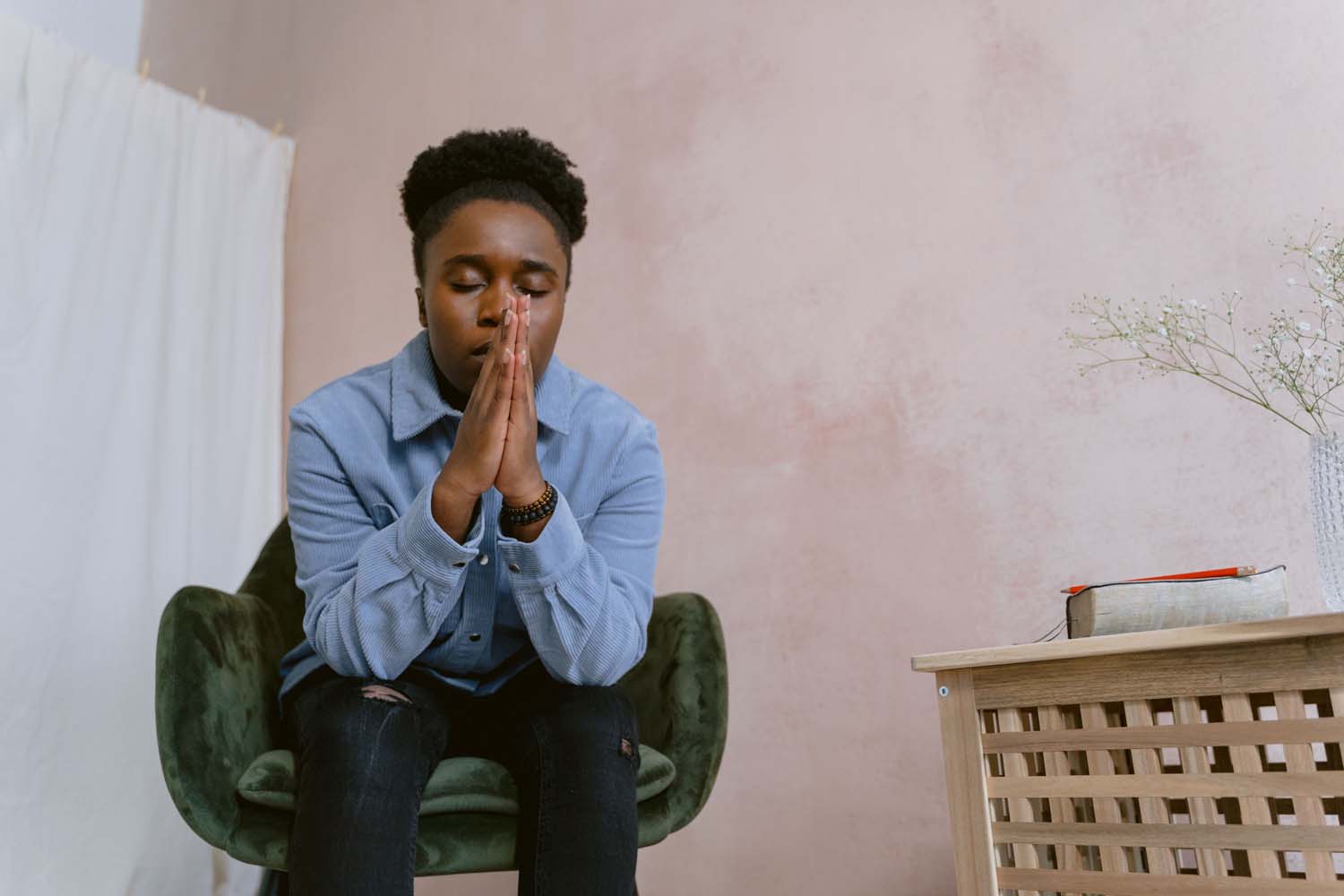
The persistent message about forgiveness was and has very often been, “Forgive others. Forgive those who have wronged or hurt you.” And that this is important, especially if you yourself want to be forgiven for any wrongdoing. But by who? They say, “By God!” Because we have no guarantee that other fellow humans will forgive us for any perceived or real offenses. Or, it seems, that maybe if we forgive others, the record will go on a certain ledger and then somehow, when we offend others, they’ll be inspired to forgive us.
We’ve been taught to focus on what we do for and to others, but not on what we do for and to ourselves. Do for others. Give to others. Don’t offend others, if you do, seek forgiveness. And, forgive others when they offend or hurt you, even the most atrocious of hurts.
The emphasis has usually been on ‘the other person’. That it is our moral duty to forgive others. But rarely, if ever, are we encouraged to have compassion and understanding towards ourselves.
And what happens if the person we need forgiveness from will not forgive us, for whatever reason? And that is, if at all we actually offended them. Do we stay with the weight of the offence even if we are actually remorseful about it? Do we condemn ourselves for always if the forgiveness from the other person doesn’t come through?
And what if the person we have hurt is ourselves, knowingly or unknowingly? What if we get ourselves into situations that lead us into hurt, sometimes detrimentally? What about the mistakes we make towards our own lives? What about the opportunities we miss, for some reason, and later regret? What if we ignore our intuition and inner voice telling us to do or not do something, and end up paying heavily for not listening?
When the offence or mistake is towards our self, who then must render the forgiveness? Who must we turn to? Are we supposed to live through life carrying the burden and heaviness of regret and self-condemnation? And what is the impact of that on our lives?
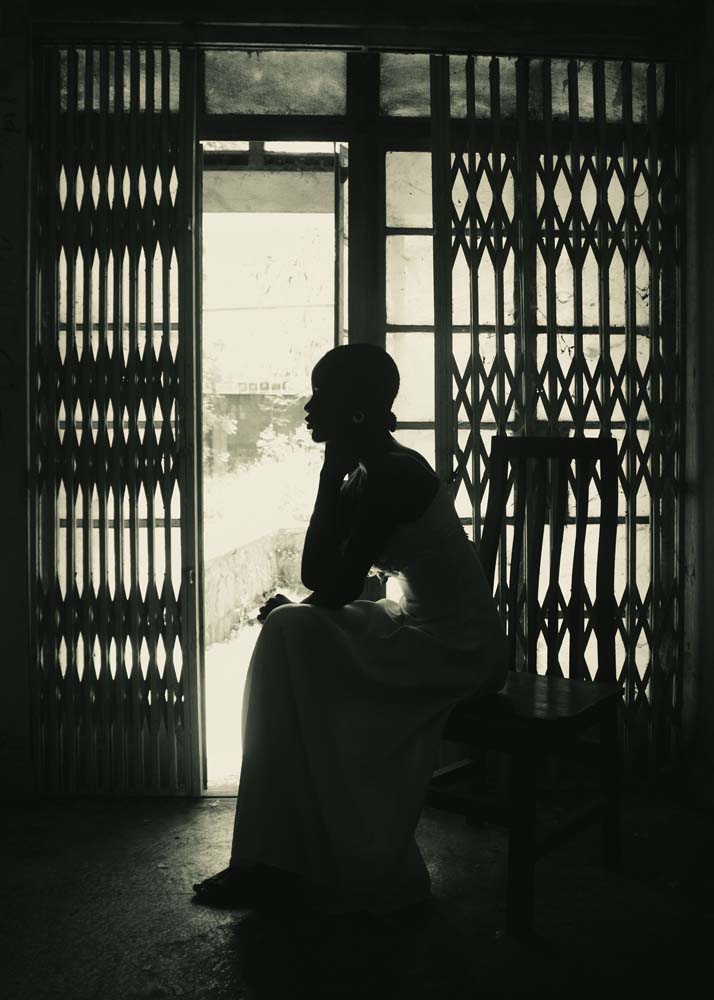
But what is forgiveness?
We’ve all been taught or come across some meaning about forgiveness. To let go of the resentment and or bitterness we may feel or have towards one who has offended us. To release the hurt. To extend mercy and grace. To also hope that when we are the offenders, we are forgiven, especially if we offer an apology and genuine remorse towards the offended person and/or God or some higher power.
And let’s also consider these common teachings: “Charity begins at home.” Now, if charity begins at home, shouldn’t it begin with the self, and then from that foundation, be extended towards others? Then this one: “Love your neighbour as you love yourself.” Isn’t it more meaningful to begin with ourselves, to understand what it means to love ourselves enough to forgive ourselves, before we can extend it towards others?
I don’t remember exactly how I run into the concept of self-forgiveness, but it was much later in adulthood. In fact, only in recent years. And it wasn’t through the usual traditional religious or cultural channels or family or society. It was through chance by randomly landing on spiritual teachings outside of traditional religious paths, and through a few others by psychologists and psychotherapists. I am so glad I did. And in recent times, through exploration of self-forgiveness with a few friends.
We do offend others, just as any normal human being. But sometimes, even when we’ve been forgiven, or been shown the semblance of it, we hold onto the guilt and self-condemnation. We’ve also been taught, mostly by religion, that forgiveness comes mostly from God. But how do we confirm that we’ve been forgiven? We are told to believe that we are, since it is said that, once we ask, it is done. But, is it that easy? Not always. And what happens if, as human as we are, we repeat the offence towards oneself or another person? How do we live with this guilt and feeling of failure?
Then there is this one: sometimes we even beat up on ourselves for not being able to forgive others who’ve seriously injured us. Imagine that! Because we are conditioned to feel guilty for not forgiving those who have hurt us – we end up feeling like we are the bad guy for not forgiving the original bad guy! How twisted is that?!
When it comes to African women, we are usually tasked to forgive and give free passes to especially those considered the ‘bigger’ and more worthy people of society, even when they’ve hurt us badly. And if we don’t forgive or we delay the forgiveness, we get gaslighted and admonished for it.
Sometimes, society guilt-trips us even over feeling good about ourselves and the good in our lives! Like we should always live life on tenterhooks. Watching out for what may go wrong just around the corner. As if to say: “Don’t feel so good about that, you never know what’s coming up next!”
Killing ourselves softly, and silently
Carrying self-condemnation, guilt, and grudges against ourselves and beating up on ourselves does not help us; in fact, it hurts us. It’s like living in self-imprisonment. It kills us slowly, softly, and silently.
Keeping oneself under chains doesn’t do much to help us. It’s stressful, and it’s sickening. And it’s limiting, because you stop seeing the light in yourself and reaching for things of the light for yourself, afterall, you’re not good enough for such.
When we feel like the offender all the time, towards ourselves or others, we start thinking we don’t deserve any good. We start asking for less from life, and from others. We start shrinking and belittling ourselves.
When we don’t forgive ourselves for things we think we’ve done wrong, or things that were for our own good but society thinks we did wrong, we get into the mode of internally expecting punishment. The result is that we don’t even reach for what would be good for us because we think we don’t deserve it.
Imagine for example, if one feels guilty about leaving a (bad) marriage, they’ll think they don’t deserve another chance, or good relationships. They’ll be sucking in all the doom & gloom prophecies by a society which upholds such institutions at any cost – and they would not expect any good for themselves or their children. When any challenge happens, they may think it is a punishment for the decision they took, instead of looking at it objectively and finding a solution.
If one continually beats up on themselves for having missed an opportunity, they’ll start thinking they don’t deserve other opportunities, and may be hesitant to reach for them, and if they do, they may still have doubts that they’ll get them because they may be expecting “punishment” for having missed previous ones.
That’s how keeping ourselves guilty and unforgiven keeps doing a number on us, while making us perpetuate a cycle of self-negation.
Shame, perpetual guilt, and self-condemnation is a heavy weight to carry. It slows us down. It blurs our vision of what life could be, and holds us back from moving into the good we could have in our lives.
Stepping into self-forgiveness
It’s interesting that we are taught that forgiveness is important for healing and nurturing relationships, that is, between people. But you ask, what about the relationship with oneself? Shouldn’t we tend to that first? To have a loving compassionate and friendly way of seeing ourselves? What if we give self-forgiveness a chance, as the starting point to healing, accepting and loving ourselves?
I’ve felt, over time, that one of the ways to know that even the unseen powers have forgiven me, is to forgive myself. And to forgive myself even when other humans may not forgive me.
Forgiveness is to understand that we are human. Sometimes we act out of hurt or fear or self-defence, emotionally, mentally or physically. Sometimes out of unhealthy conditioning. Sometimes out of ignorance or limited information. Sometimes out of trauma. As such, we are bound to offend ourselves and/or others, either through omission or commission. However, we need to step into seeing ourselves as regular human beings, who make mistakes, but who can learn and grow. Because no amount of self-punishment can heal us or make us better people, or reverse the mistake.
Forgiving ourselves is to understand that if we’d known better, we’d have done better. It is about allowing ourselves to step into understanding of our own mistakes, and then seeking to remedy them where possible, with some gentleness and compassion towards ourselves, and true remorse towards those we genuinely hurt, whether that be ourselves or another person.
What if the offence we’ve committed or omitted is so bad? What now? We are probably already paying for the offence. Because decisions, choices and actions have consequences, and we can’t always run away from that, and maybe we shouldn’t. But while we experience the effects, we don’t need to continually add self-bashing to it. Because, how much more are we going to punish ourselves? Isn’t the punishment from the consequences already enough?
Instead, it may help us better to ask: “What now? I may not be able to change the past, but where do I take it from here? What have I learned, and what can I do better starting from where I am moving forward?”
It’s not about letting ourselves off the hook. It’s not about giving ourselves a free pass. It is not about not caring about what we did or did not do. It’s not about rationalizing or dismissing what we did or did not do. No. It’s about sitting with the issue, examining it, and seeing where we erred or missed the mark, and then choosing to make amends where possible, and learn from it. It’s about choosing to step away from the harshness toward ourselves and instead opt for doing the inner work to understand and navigate what happened, and put up measures to reduce chances of repeating it. In the process, we have better chances for repairing, learning, growing and transforming.
On the other side, sometimes we condemn or look down on ourselves for how someone has hurt or treated us. How could we be so stupid or naïve? How could we let our guard down? How could we have missed the red flags? In fact, someone once told me that, if I’d allowed them to treat me that poorly, then I was stupider than them. It ate me up for a while, but I eventually saw the person’s behaviour for what it was, and the motivation behind it.
We have to stop using other people’s behaviour towards us as a definition of who and what we are. Their behaviour reveals more about who they are, than about who we are or our worth. We don’t have to feel shame for having been open to allowing them participate in our lives and for not having had all the information we needed to make appropriate decisions when dealing with them.
Shaming and condemning ourselves blinds us from seeing the person who hurt us for who they really are. But if we can see them truly as they show up, we can learn and grow from the experience, and put up the necessary boundaries. And we don’t need to wait for their apology, or remorse or change. We can release ourselves from what they did without their participation in the process. It’s about letting go of the irreversible past and creating space for new experiences.
Self-forgiveness is challenging. It takes work. And it takes time.
Because it calls us to look inward. It is much easier to look outward at other people and feel like we are the “good people” because they did something wrong and we are forgiving them. It’s harder when we have to turn the gaze inward and look at our own shame, regrets, mistakes, fears, hold-backs, self-loathing, self-doubts and self-deprecation. It involves inner work. The work of looking at our inner nakedness and the things we’ve been told to think about ourselves or be ashamed of, and instead start making peace with them as well as cleaning out what needs to be cleaned out. It takes effort to look at and work on our inner issues.
The responsibility to change the ways in which we are hurting ourselves or others, or the way in which we are letting others hurt us, rests upon our shoulders. No one can do the work for us. It is us to release the guilt, the resentment, the regrets, the self-bashing, the shame, the self-loathing, the self-shrinking, and the self-abandonment. All of that. It’s in our hands to hold onto or to release. It’s easier avoided than done. But if not done, it keeps us from embracing our wholeness.
It takes time. And practice. Gentle, kind, committed effort. We can’t heal a wound by being aggressive towards it. We heal it by gently cleaning away the debris – the shame, the self-loathing, the self-condemnation, the unworthiness. Then laying on the healing treatment, and then protecting it from further injury, and giving it time to heal. That can only be done through patient, tender, loving, and compassionate care towards ourselves.
Thank goodness we can learn to have compassion for ourselves, to understand that we need to be the first recipients of our own mercies and forgiveness. Just as we are encouraged to offer mercy or grace to those who offend us, it seems wise that we extend the same or even more mercy and grace towards ourselves.
We, just as anyone else, are worthy of forgiveness. Not just from other people, but most of all, and firstly, from ourselves. We need it. For our own good and wellbeing.
And should we need the help of a professional counsellor or therapist to navigate the process, we are worthy of it too, and we ought to seek that help, where possible.
Seeing life anew
S/he who forgives gains a victory in the dispute. – African Proverb
Forgiving ourselves helps us put to rest the conflict within ourselves. It allows us to see ourselves anew, with less blemishes and with less wounds. When we clean up our offense ledgers, we create space that we can fill up with more positive thoughts and emotions about ourselves. We start to know that we too deserve our good, our moment in the light.
With so much burden laid away, our hearts and minds become lighter, and we start to see and seek more beauty out of life, because we know we are forgiven, by life, by ourselves, and by others – those who are able to. We allow ourselves to reclaim our wholeness and our voice, and we are better able to show up in life in fuller capacity.
We don’t need to spend our whole life whipping ourselves. We are not here to be perfect, but to be human and whole.
We deserve to live a wholesome fuller life. So let’s go get it!