
Who taught you which parts of yourself were supposed to be feminine, and which ones had to be hidden, assigned roles, or handed over to somebody else with submission?
Somebody, at some point, drew a line down the middle of being-human and called one side hers and the other his. Nurturing and empathy went one way while brute force and hardwiring went the other. Intuition here, decisiveness there, as though a person were a machine with two faculties and a rule against ever crossing over. A tidy arc. Nonsense, on inspection!
You may have learnt it before you even had the language for it when a girl is praised for being accommodating, and a boy teased for crying; or when a woman is expected to know what everybody feels and a man is expected to know what everybody should do. By adulthood, these lessons are so intimate they masquerade as personality. We call a woman naturally nurturing after seeing her responsible for unpaid emotional labour for years. We call a man stoic after repressing every visible evidence of empathy.
But life keeps making a mockery of such definitions.
A mother’s hands, in the same unbroken minute, are sharp enough to yank a child back from a moving car, and soft enough, seconds later, to undo the fright her own sharpness caused. The same woman who rocks a feverish child through the night may be frighteningly overprotective when somebody threatens that child.
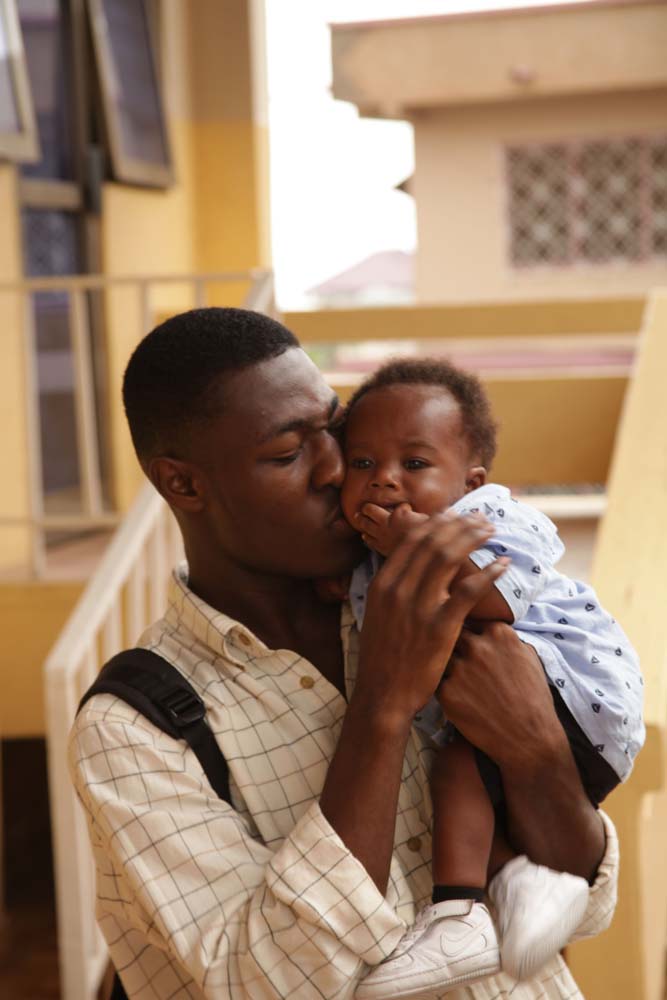
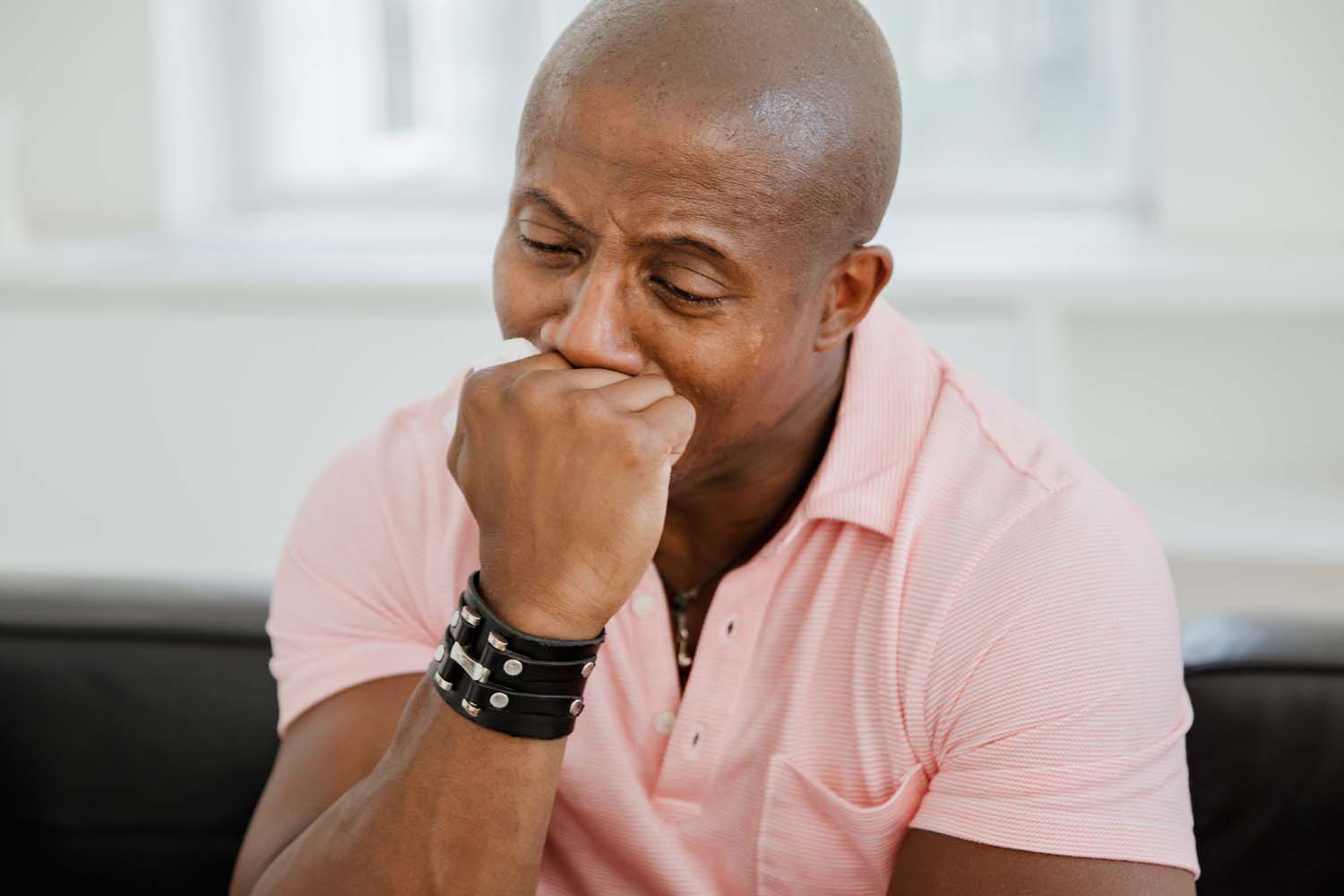
A man may carry his father’s coffin with exactly the composure his culture demands of him, then comes undone completely, without recourse, the moment he is alone in the car or in the misery of his loneliness. The same man who guides a family through crisis without crying may find himself at a supermarket aisle by the smell of his father’s old Imperial soap.
Neither that woman or man switched sides or borrowed a trait that belonged to someone else. Each simply reached for what the moment needed, as would a hand reach for whichever tool the job in front of it actually needs, without first consulting which drawer the tool was supposed to be in.
Human beings keep leaking at their sensitive places. Grief, anger, gentleness, pain, fear, ambition, protectiveness, intuition, ruthlessness, or love have never been as obedient to the categories we built around them as we pretend.
We must examine ourselves. Which qualities in you have grown, and which have been kept under lock because they were assigned the wrong sex? Which women around you have had to be caregivers just because women are more nurturing? Which men have been applauded for being dependable while nobody thought to ask what the cost of their providence was?
Femininity and masculinity need not be two opposing sides we spend our lives decorating, defending and policing. They are our histories, languages, natures, lifestyles and therefore can be useful, meaningful, sometimes beautiful, and still incapable of addressing the whole person. You are allowed a larger selfhood than the one your gender ascribes you.
The Masculine-Feminine line was never a discovery about human nature. I strongly believe that it was a distracting scheme. Assign love to women and it is available on demand, unpaid, and expected just as air is expected. Stamp force and ambition on men and it is an obligation with no exit clause, so grief gets swallowed and sensitivity gets hidden, and any man who reaches for the register he was told belongs to women risks being cast out of his own manhood for his human traits.
Because selfhood is an expression of who someone is, in relation to the world at large, you were never meant to go looking for your masculine or feminine side for it to measure up and be worthy. Masculine and feminine identity framing tends to keep men and women inside a narrow category, only that now they are made responsible for managing the human responsibilities that cut across different genders.
Any one person is a whole being, with unique traits, capable of the entire register at once and none of it needs translating into a construct invented by people who needed the line to hold so their own advantage would hold with it.
Yes. The missing piece is where real life happens. Most versions that talk about masculinity and femininity not show how we actually learn what it means to be a man or a woman, and how we get conditioned into it. It should start with the things around us i.e., how boys and girls are raised, what families expect of them, who gets to inherit land, who pays bride price, who cooks and cares for children, how churches and traditions shape us, how men are taught to behave, how women are taught to behave, and how money, age and class change those expectations. From there, we can question whether some of what we call masculine or feminine is simply what we were conditioned by. The point is to examine those old rules and decide which ones still deserve to define us.
My grandmother had a term that would not survive a contemporary workshop on gender, for different people. She said a man chunye ber (his heart is beautiful/good) and it had little to do with his muscles and everything to do with how he carried himself. She could describe a woman as dhako ber gi chiane (a woman is beautiful in her own essence) because she had the unnerving habit of making decisions and living with them. These words were common in many homesteads, in the market, and in the judgments made at a dinner table as people discussed somebody else’s child.
Yet the same grandmother who thought a boy should learn to endure was also tenderly conspiratorial with him when he was hurting. She knew that, as a man, I could be strong and still need help. She also knew that a woman is gentle without necessarily being pliable. Our elders did not always have the language we now use for gender, but they understood something modern discourse occasionally obscures; human beings are rarely as singular as the roles assigned to them.
Our difficulty begins with the urge to turn temperament into total identity and personality. We have been doing this for a long time. A trait appears in a person and somebody gives it a gender. Courage settles on one side of the imaginary border; tenderness on the other. Authority is dressed in a man’s shirt and caregiving is sent to the women’s kitchen. Assertiveness has a male voice and grace is feminine. After enough generations, the costume is fronted as truth.
I grew up around women whose lives made that distinction difficult to maintain. They sold vegetables at the roadside and could bargain with a ferocity that would have made a corporate negotiator take notes, then return home and spend the evening sorting beans with a child asleep against their back. My aunties organized the funeral of my great grandmother with efficiency, and bullied three reluctant uncles into contributing money. They settled disputes. They comforted their widowed sister-in-law, my grandmother, and still cried helplessly when the coffin was lowered.
Nobody needed to explain which part of them was masculine. They were simply being themselves. That seems to be a more faithful description of human character. A person navigates a circumstance some days needing patience; others demanding grit. There are moments for yielding and moments when yielding is cowardice. One can soothe a frightened child in the morning and confront a bank manager in the afternoon. The same hand that strokes a baby’s head signs a document ending a business partnership.

Does such a hand change their gender?
We sometimes forget this because social life prefers clean division of labour. A household has to know who will fetch water, pay school fees, talk with the landlord, take care of the sick grandmother, or represent the family at the chief’s office. Communities survive partly by distributing responsibilities. Over time, however, a practical arrangement is normalized as a moral expectation and the person who has always done the work is the person who is thought to be made for the work, exactly how a daughter becomes ‘the responsible one’ and a son is ‘the provider.’
Neither title begins as a prison. Often it is the responsible thing to be. A daughter is dependable, so people call her when something goes wrong and son earns his first salary and sends money home, so everybody imagines his income as part of the family obligations. Years later, the daughter is grieving and the son is drowning under obligations neither of them remembers volunteering for.
This is particularly revealing when it comes to conversations about African womanhood, because we sometimes speak of our culture as though an enormous ancestral voice once sat beneath a tree and issued identical instructions to every woman on the continent. Our cultures were never so scripted. Kinship systems, marriage arrangements, and inheritance differed. Women held different authorities in different societies. Some wielded economic influence through markets and trade; others exercised authority through matriarchy, age, lineage, ritual or household management. A woman’s position could change according to whether she was a daughter, wife, widow, mother, elder, firstborn, migrant, trader or landowner.
Even the idea of the traditional African woman is largely recent in its simplicity. It is a modern construction looking backwards and pretending to be ancient. A grandmother who is invoked to settle an argument about what women should do may herself have lived through several epochs of the world: colonial schooling, Christian marriage, cash economies, land registration, urban migration, political independence, television, mobile phones, the disappearance of certain forms of communal life and the arrival of others. She may have been married at nineteen and still have spent her life in spaces her husband could not enter. Her daughter may have gone to university and her granddaughter now lives in Berlin, Kampala or Nairobi. What would have been unimaginable to all of them.
Which moment, then, is the authentic one?
The question is less useful the longer one looks. Culture is not a museum where the ancestors left everything exactly where they found it. It is closer to a family kitchen and things are inherited, changed, discarded, improvised and occasionally burnt beyond recognition. Somebody keeps the old pot, buys an electric cooker, insists that food tastes better over firewood, or gets an electricity bill to pay.
The same thing happens to gender. A young woman has her grandmother’s reverence for family and her mother’s uncompromising demand for education while having an entirely different understanding of marriage. A young man may inherit the old expectation that he must provide while also wanting to be the father who attends every school meeting, knows his daughter’s friends and nurses a feverish child while his partner works. These are not necessarily contradictions needing resolution than they are what social change is from one person to another.
I have sometimes thought that our contemporary language of masculine and feminine energy is an attempt to give metaphysical dignity to distinctions that are often much more mundane. We take behaviour shaped by history, preference, upbringing, attraction and circumstance, give it a grander name, and then behave as though we have discovered a law of nature.
A woman likes being pursued, therefore she is feminine. A man likes to lead, therefore he is masculine. A woman is sexually assertive, and suddenly people are uncertain which way to address her. A man enjoys being cared for, and somebody worries that he has misplaced his masculinity.
Desire has never been particularly interested in our filing systems. A woman may want a man who takes initiative because she enjoys surrendering that responsibility in intimacy. Another may find such an arrangement suffocating. A man may enjoy providing because generosity gives him purpose. Another may prefer an almost entirely egalitarian financial arrangement. Neither preference tells us what men or women are. It tells us how distinct people are.
A woman who likes a traditionally assertive man speaks as though all women secretly want one and a man who enjoys a highly independent partner decides that dependence is weakness. Someone’s successful relationship is evidence for a theory about half the human race. That is how we make love, sex, and relationships a referendum on preferences. Meanwhile, people are simply trying to decide how to live a meaningful life.
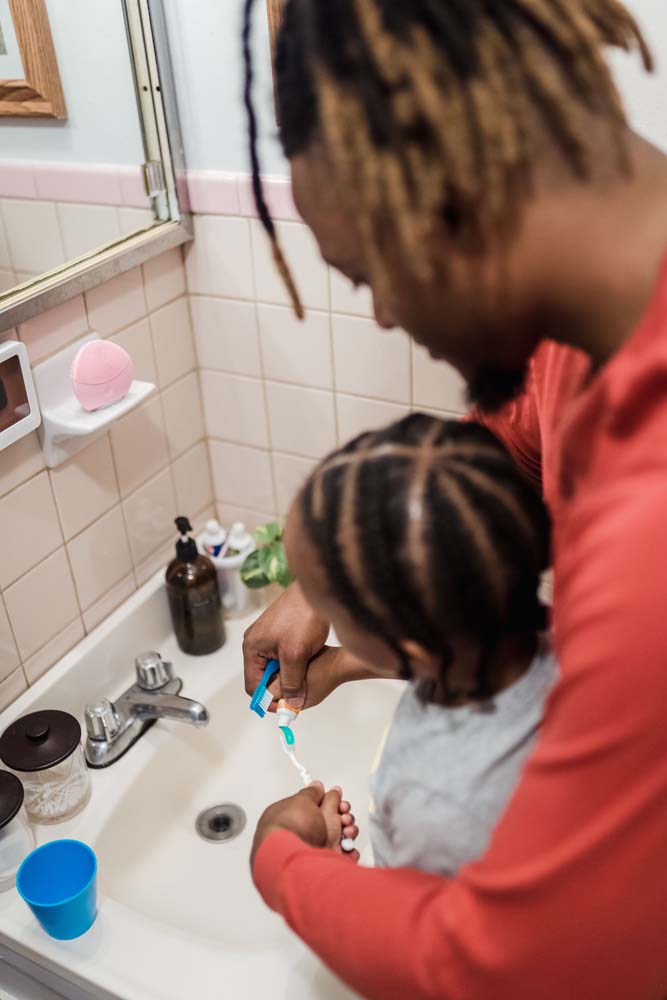
I find ordinary domestic life much more philosophically instructive than most arguments about gender. A couple, when their child develops a fever at two in the morning, has whatever theories they had about masculine and feminine energy giving way to practical intelligence. Someone searches, checks the hospital number, dresses the child, calls a friend to borrow money, drives, or stays awake. An emergency shows capacities that ideology neatly separates. This is one reason I hesitate whenever people say that men are naturally providers or women are naturally nurturers. Provision and nurture are not abstract essences. And they are not mutually exclusive. They are things people do for one another. A mother provides. A father nurtures. A teenage boy can become the person who sits beside his younger sister during chemotherapy because he is the one who knows how to make her laugh.
Life places responsibility on us rather promiscuously. Our labels come afterwards. The same complication appears in masculinity. African men have inherited several competing instructions about what a man should be. The older expectation of providing for kin remains powerful. Christianity added its own headship and responsibility roles; colonial education produced another model of respectable male authority; and urban capitalism introduced the professional provider-man with a salary, car, house, and upward trajectory. Popular culture has since added the internet’s mythology of the high-value man, where masculinity is measured through money, sexual access, dominance and the ability to appear permanently untroubled.
A young man receives all of these messages at once. His grandfather tells him to be responsible, his pastor tells him to lead, his friends tell him women respect money, his employer tells him to compete, the internet tells him never to be vulnerable, his girlfriend wants emotional intimacy, and his mother calls to ask for school fees for his younger siblings. Then he goes home and beneath all these instructions he is simply tired and overwhelmed.
I have sympathy for confusion. Women have their own crowded expectations. A mother advises her daughter to secure a rich and financially secure husband while encouraging her to keep a secret bank account her husband cannot touch; a church preaches submission while a women’s group teaches financial independence; university education tells her she can be anything while relatives ask when she will settle down and have a family. Her Instagram, grandmother, education, salary, body, desire, family background all offer different femininities.
Nobody emerges from this untouched.
We are plunged into the pit of despair and confusion and that is why the language of being feminine or masculine is inadequate when it is treated as the totality of a person. It asks a person to identify the correct side of a fence when much of human life happens while climbing over it, sitting on it, ignoring it or discovering that the fence was built by people who lived half a century ago.
A more interesting task is learning one’s own capacities without needing each of them to present a gender label. A woman loves nurturing children. Good. She may hate cooking. Also good. Or enjoy being pursued and still be a CEO. She may be deeply romantic and fiercely solitary. She may be sexually assertive yet passionately receptive. She may want a husband who leads in certain parts of their relationship while she leads strongly in others. There is no philosophical emergency here!
A man may enjoy taking care of people and also want to be taken care of. He may be decisive at work and indecisive about what to cook for dinner. He may enjoy fixing things around the house and spend an evening reading poetry. He may take charge sexually and still be emotionally generous and loving. He may be reserved without being emotionally vacant.
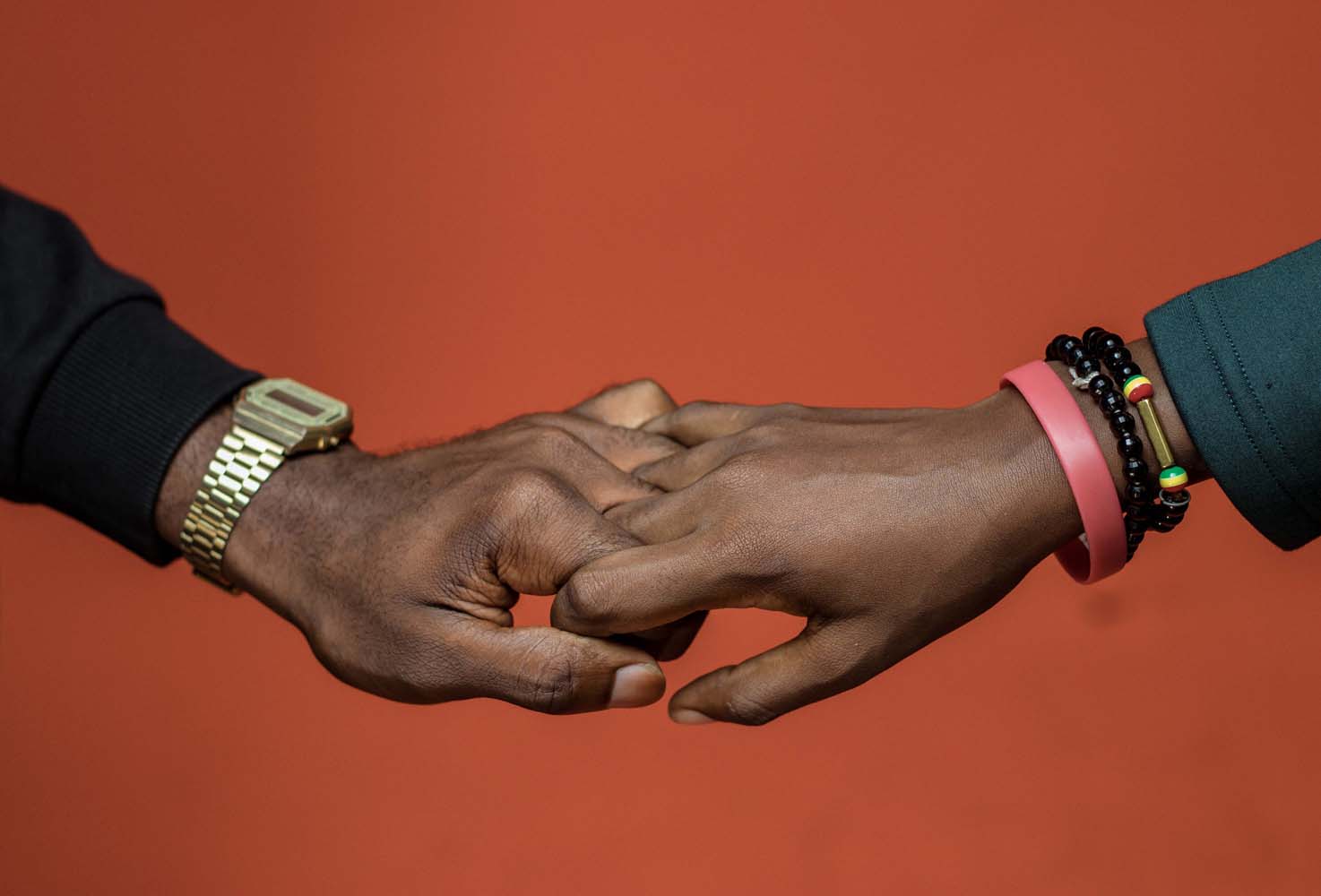
A person remains larger than their gender description and that is the part of the conversation that is most valuable. We should be careful whenever a social category is so powerful that an individual has to defend his or her humanity against it. A woman should not have to prove her femininity by being accommodating and man should not have to prove his masculinity by being invulnerable. Neither should have to cling on to an identity simply because other people find that reassuring.
Human beings have always been more varied than the categories invented to describe them and we should allow each other that luxury.
A woman is not freer by exchanging one rigid definition of femininity for another. She is freer as the definitions lose their power to dictate what she is allowed to be. The same mercy ought to be extended to men.
We might then discover that masculinity and femininity were never two complete worlds after all. They are labels placed over a much older and more unruly territory of the human capacity to care, desire, endure, create, protect, yield, resist, imagine, labour, grieve, laugh, command, listen and change. The territory was always larger than the map. Our mistake was believing the map had borders.