Fully Human, Actually!
One day I realised that I was fully human. But of course! I’ve always been and I have always known it. Except that I seemed to be expected to live under a set of rules different from those set for other humans.
But who sets all these rules, prescriptions and expectations of how a woman should be in this life? I always asked my mother. Sometimes she had some answers, sometimes she didn’t, and would just tell me that she found it like so, or that religion or culture or society in general said so.
And then, why should someone else determine how a woman of my skin colour should perceive herself? And why should someone else be determining the narrative of what life should be or is like for me?
While growing up, Mama tried to balance things out. Chores were divided across both girls and boys. I never felt so much of a difference except that I was biologically a girl and boys were biologically boys. I was also aware as we grew older that physically, I didn’t have the same physical strength as the boys did, but that didn’t make me any lesser of a human. I played together with the boys. There was no game I was barred from. There were no limitations as to who should get an education and other opportunities, or on who should become successful in life. All that seemed like what life should be like, different humans living together while acknowledging each other fully, contributing to life, building their lives to the best they can and enjoying it together as humans. Except that life wasn’t completely like that, and it still isn’t.
There was another side of life I was learning about as I grew up, both from within my own family and from observing the society around me; to this day, I continue to see this side of life. I didn’t have the words to use when I was young, but the differences in how women and men were required to live their lives started becoming obvious to me, and many of these differences were not fair or pleasant at all; they were and are limiting in many ways. As an adult woman now, I have a lived experience of these different perceptions, expectations and demands on my life, and their impact hasn’t been small.
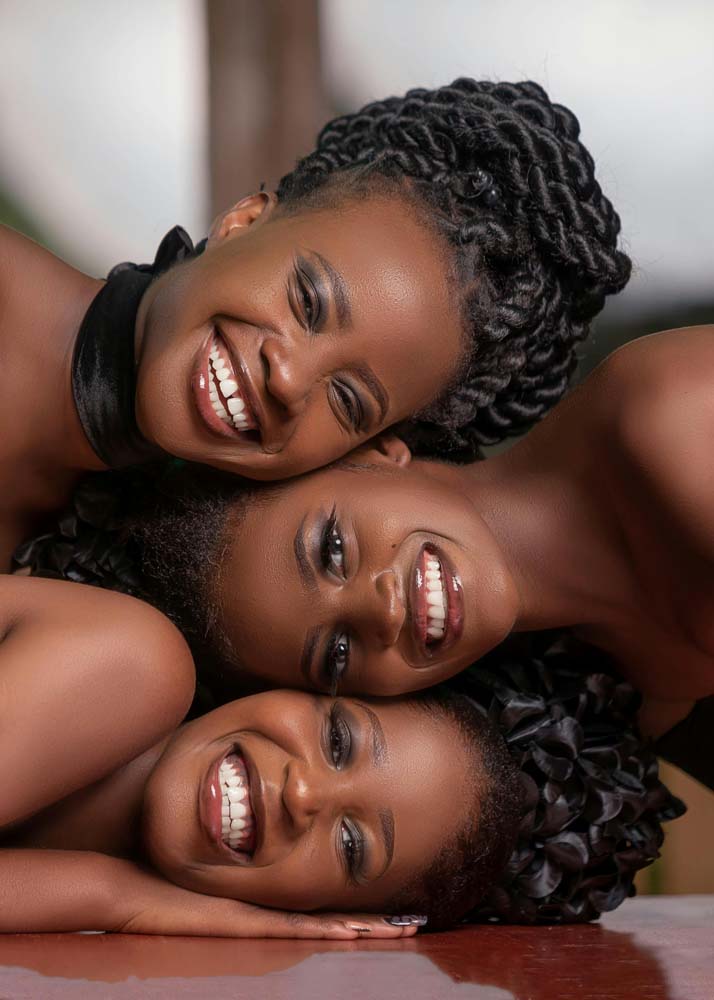
Then there is the colour of my skin. I am an African woman. A black woman. My kids have always asked me why we are referred to as black, that our skins are brown, not black. I tell them that that is just a label, but they can call themselves brown if they want to, only that that provision may not always be available when they are filling out official documents. I tell them that they don’t need to view themselves through limiting boxes imposed upon them by external forces. Still, in spite of all the labelling and different interpretations, we love our melanin black/brown skin and our afro hair.
But, our melanin skin comes with its own perceptions accorded to it. Once I started watching TV and as I got exposed more to the world and started seeing people of different races and skin colour, it became obvious to me what race or skin colour is elevated above the other, and how that becomes propagated as the desired norm towards which everyone should aspire. The media propagated it, and the general world culture, structures, and systems propagated it, and continue to do so to this day.
Millennia of conditioning that tells us to perceive ourselves in a particular limiting way, and to show up in a certain way becomes deeply ingrained and starts to drive one’s behaviours to support that perception. On a surface level for example, many develop a preference for a lighter skin colour and straighter hair. I myself remember that while I had many questions about some of these matters since childhood, and while some of my reflections on race and colour had gotten me in a bit of trouble while in high school, I did not for one moment question whether I truly needed to straighten my hair or not when I was joining university. I was following the script. Also, there seemed no alternative available for easy handling of my kinky hair. So I took my hair for repeated straightening whenever I thought I needed it. It was only much later in life that I chose to embrace my natural afro hair-partly due to my desire to reduce the use of toxic chemicals on my body, as a personal choice, not as a dismissal of the validity of the alternative.
On a deeper level, we get conditioned to ask for less, to expect less, to take up less space, and many tend to internalize this belief. On a systemic and structural level, the world seems to tell us that we deserve less, and tends to give us less. It becomes a rhythm, a sort of hypnosis that we get caught up in.
But a time comes and one starts to wake up from this hypnosis.
The waking up happens differently for each of us. For me, it started during medical school. Through the years that I was in the anatomy class, for me it wasn’t about just cutting and opening cadavers and learning about the physical make-up of the body, I was having my own inner exploration and awakening as well. As we went deeper into the ever-increasing microscopic make-up of the human body and brain, something became very obvious to me; that once one cut away the genitals and other related reproductive organs, man and woman were essentially all just humans. Towards the end of medical school, an opportunity that had me working on the surgical ward at a University hospital in Germany further revealed to me that once the skin was peeled back, we were all just humans, whatever the colour of our skin.
As I explored deeper into different subjects on life, I could no longer unsee what I was seeing; I could no longer unlearn what I was learning: that what I’d thought and felt all along and tried to live out as much as I could – that I was fully human with the right to live and enjoy my life as a full human, was as valid as life itself, and that this was applicable for my fellow girls and women, as well as for anyone, no matter the color of their skin. I knew these truths all along, but now I was investigating them and confirming them, which gave a huge support to the mindset I held about these matters.
Waking up to realising that you can live a fuller human life even as an African woman doesn’t happen in one leap. It’s actually a journey, but every step is worth taking. Granted, not every woman has the leeway to do this yet because of several limitations and chains still holding her feet to where she is, whether these be informational, psychological, financial, political, social, cultural, personal or otherwise. But we cannot be discouraged anymore from reaching for a fuller human experience, one girl and one woman at a time, while inspiring each other and supporting one another towards that experience.
It’s hard to turn back once one has started the journey. Because each question answered leads to another question, answers, reflections, decisions and actions, which lead to the next.
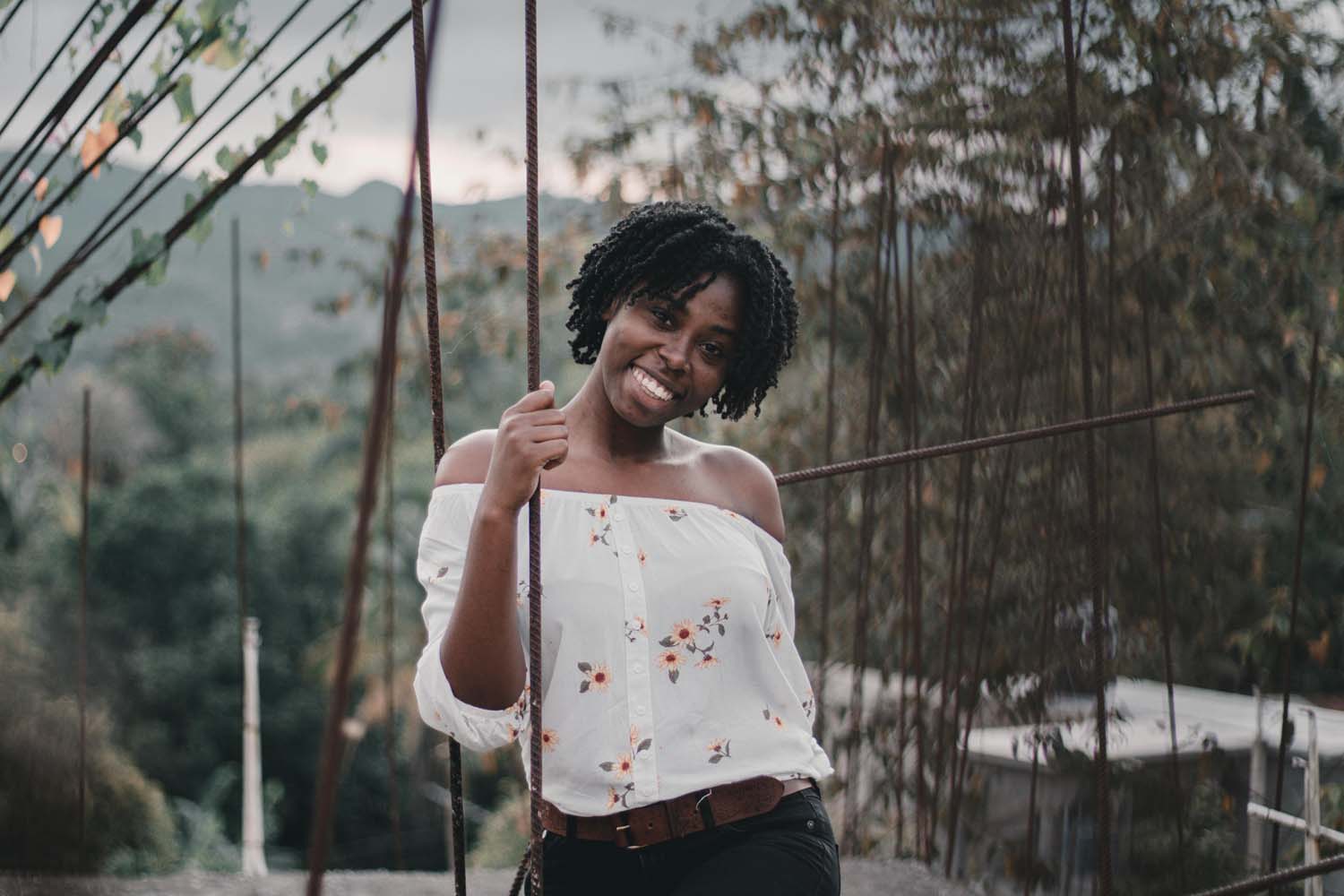
To reclaim and embrace our full humanity and be on the journey to living it out means recognizing our worth for just being here. That our desires and dreams and goals are valid too; that we too want to experience the fullness of life and enjoy it to every extent possible; and that we too have a right to choices and available resources and opportunities. We are allowed to be strong and vulnerable at the same time and that while we care for and support others, we too deserve care and support. And while nature gave us the biology that we have, we do not have to be slaves to our biology and to society’s demands on us. We are here to make our contribution to life, but not be the sacrificial lambs in that process.
How we African women have navigated all the limiting perceptions placed upon us and started reclaiming our full humanity and choosing to live it out as fully as we possibly can over the years is a beautiful turn of events, yet still, we have a long way to go on that reclamation journey.
Nevertheless, we are here to experience life in our own ways, which ways should not be limited to a one-size-fits-all prescription determined by only particular groups of humans. Given a fair chance and opportunity, each of us as an African woman reserves the right to define and shape the story and journey of her life. Because we too are fully human, and we don’t need permission from another person for us to live as such.
Once you know who and what you are, life calls you to start living as your true identity. One thing is for sure, that even with the challenges faced along the way, there is no turning back!